The old note will continue to be accepted for other utility bill payments as well as at railway ticketing counters and counters of government or public sector undertaking buses for purchase of bus tickets till December 15

The central government is on track to meet its fiscal deficit target of 6.4 per cent of the GDP for 2022-23 on the back of strong growth in revenue collections, the World Bank said in its India Development Update on Tuesday. High nominal GDP growth in the first quarter supported strong growth in revenue collection, especially Goods and Services Tax (GST), despite tax cuts on fuel. Notwithstanding an increase in spending due to expanded fertilizer subsidies and food subsidies for vulnerable households in response to the commodity price shock, the government is on track to meet its FY22/23 fiscal deficit target of 6.4 per cent of GDP and the general government deficit is projected to decline to 9.6 per cent from 10.3 per cent in FY21/22 and 13.3 per cent in FY20/21.

Few actors share Kareena's fearlessness for closeups in their 40s. A still force in a high-strung thriller, her marvellously opaque portrayal of a woman hiding skeletons in her closet turns a crafty police procedural into a wistful story of survival, observes Sukanya Verma.
The RBI's surprise rate hike may have been prompted by its inability to convince the government to cut excise duty on petrol and diesel and take other supply-side measures to tame runaway inflation, sources aware of the central bank's thinking said on Thursday. There has been a record Rs 10 a litre increase in petrol and diesel prices in a matter of 16 days beginning March 22, which has further fuelled the already high commodity prices. The RBI, which is mandated to ensure inflation is under 6 per cent, acted with a 0.40 per cent increase in repo rate to check prices before they went completely out of hand.

It may not have a bold design but it addresses the needs for comfortable and affordable commuting.

For all its claims to economic glory, the majority of India's population lives vulnerable lives, a situation that has only worsened over the past 15 years, to the extent that the government now fears to release economic data or even conduct a proper Census, notes Rathin Roy.

Lead indicators suggest that domestic current account deficit (CAD) is likely to reduce in 2023, while macro-economic stability has received a boost from inflation being brought back to the official tolerance band, according to the Reserve Bank of India's (RBI's) January 2023 Bulletin. "With the merchandise trade deficit reaching an all-time high of $83.5 billion in a quarter, and a rise in net outgo from the income account, the current account deficit increased to 4.4 per cent of GDP in Q2FY23," the State of the Economy article in the bulletin said. "It is noteworthy, however, that the CAD for Q1 was revised down from 2.8 per cent to 2.2 per cent on account of downward adjustment in Customs data.
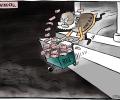
The windfall taxes on domestic crude oil production and fuel exports will generate close to $12 billion (Rs 94,800 crore) for the government in the remainder of the current fiscal while trimming profits of firms such as Reliance Industries Ltd and ONGC, Moody's Investors Service said Tuesday. On July 1, the government imposed windfall gain taxes on the export of petrol, diesel and aviation turbine fuel (ATF), and on the domestic production of crude oil. It has also mandated exporters to meet the requirements of the domestic market first.

The Sri Lankan government has appointed an advisory committee comprising eminent economic and fiscal experts to provide guidance on addressing the current debt crisis and engaging with the International Monetary Fund (IMF) and other lenders as the country struggles to combat the unprecedented shortage of foreign reserves.

It offers a real opportunity for the flag carrier to compete on the world stage, backed by a leading conglomerate with deep pockets like the Tatas, observes Indrajit Gupta.
The Reserve Bank is expected to go for another rate hike of 0.40 per cent at the scheduled review of the monetary policy next week, a foreign brokerage said on Friday. The central bank's rate setting panel will follow it up with a 0.35 per cent hike in rates at the next review in August, or make it into a 0.50 per cent hike next week and a 0.25 per cent increase in August, to make the total quantum of rate hikes at 0.75 per cent, the report by Bofa Securities said. On May 4, the Reserve Bank of India (RBI) hiked rates by 0.40 per cent, and Governor Shaktikanta Das has already called a rate hike at the forthcoming review as a "no brainer" given the pressure to maintain its core mandate of inflation in the targeted band of under 6 per cent.
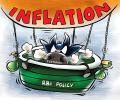
The RBI's Monetary Policy Committee brainstormed the impact of any future shocks on the inflation trajectory and stressed monitoring the cumulative effect of monetary policy actions over the past one year, which is still unfolding, revealed minutes of the rate-setting panel released on Thursday. The minutes of the meeting of the Monetary Policy Committee (MPC), headed by Reserve Bank Governor Shaktikanta Das, also indicated it would be premature to declare an end to the monetary tightening cycle, which started in May 2022 to check high inflation following the outbreak of the Russia-Ukraine war. The central bank, which effected six back-to-back hikes in the key short-term lending rate (repo) since May 2022 to check high inflation, decided to take a pause early this month.

To ramp up domestic battery manufacturing capacity and reduce the dependence on imports, the government has initiated talks with a few lithium-rich countries to supply the mineral to Indian companies, industry sources informed Business Standard. The Ministry of External Affairs (MEA) held a meeting with the ambassadors of countries, including Argentina, Chile, and Bolivia, among others, to put forth its request.

Finance Minister Nirmala Sitharaman on Thursday said India has ramped up the import of crude oil from Russia at discounted prices amid sanctions on Moscow as part of the country's inflation management. "In a situation where global prices were going beyond anyone's affordability, at that stage to take a very strong political decision, I respect the prime minister for his courage on this to get it from Russia because they are ready to give it to you at discount. And how speedily did we manage to do it," she said. India ramped up its import from Russia from about 2 per cent of the total shipment of petroleum products to 12-13 per cent in a couple of months as part of inflation management, she said at a seminar organised by economic think-tank Icrier.

The Reserve Bank of India on Friday decided to keep benchmark interest rate unchanged at 4 per cent but maintained an accommodative stance even as the economy is showing signs of recovery after the second Covid wave.

Finance Minister Nirmala Sitharaman on Thursday said inflation management cannot be "singularly" left to the monetary policy as a majority of activities are outside its purview in the current context. Speaking at a seminar organised by economic think-tank Icrier, the finance minister said that both the fiscal policy and the monetary policy have to work together to contain inflation. Consumer price index (CPI) based inflation or retail inflation is ruling above the Reserve Bank's comfort level of 6 per cent since January.

Says impact of crisis in China won't be as big here as in some other countries

Wholesale price-based inflation rose to a record high of 15.88 per cent in May on rising prices of food items and crude oil. The Wholesale Price Index-based inflation was 15.08 per cent in April and 13.11 per cent in May last year. "The high rate of inflation in May, 2022 is primarily due to rise in prices of mineral oils, crude petroleum & natural gas, food articles, basic metals, non-food articles, chemicals & chemical products and food products etc. as compared to the corresponding month of the previous year," the commerce and industry ministry said in a statement.

'When you need to revive the economy, when you need to revive aggregate demand, you cut taxes.' 'But what's this government doing?' 'It's increasing taxes for the middle class and the vast majority of the poor on fuel, which has a ratchet effect on most other products.'

The United Nations on Wednesday pared down India's growth forecast by 20 basis points to 5.8 per cent for 2023 calendar year, citing higher interest rates and risks of recession in the developed world weighing on investment and exports. "Economic growth in India is projected to moderate in 2023, with higher interest rates weighing on investment and slower global growth weakening exports," it said in its latest World Economic Situation and Prospects report. The report has projected global trade to contract 0.4 per cent and the world economy to grow at 1.9 per cent in 2023.

India's services sector lost momentum in July as demand was curtailed by competitive pressures, elevated inflation and unfavourable weather, a monthly survey said on Wednesday. The seasonally adjusted S&P Global India Services PMI Business Activity Index fell from 59.2 in June to 55.5 in July, pointing to the slowest rate of growth in four months. For the 12th straight month, the services sector witnessed an expansion in output. In Purchasing Managers' Index (PMI) parlance, a print above 50 means expansion while a score below 50 denotes contraction.

NITI Aayog has not said what the reasons were for having achieved or not having achieved what was sought to be achieved, or what lessons can be learned for the future, points out Aakar Patel.

The dreary, cold months from December to February may prove to be the undoing of many a nation as they grapple with sky-high fuel prices - a result of the Ukraine conflict and the pandemic. Many - Europe, South Korea, Japan, and China - will still pull through on the strength of their wealth or because of strong storage infrastructure. But India will have its back to the wall. Signs of liquefied natural gas (LNG) rates hitting new records this winter are already evident.

Last week, govt sold shares worth Rs 220 crore in the open market without making a formal announcement. The deal came to light only this week.

Gabbard, 41, who retired from the House of Representatives last year, made the announcement on Twitter.

A statement from the finance ministry said, 'it shall be the policy of the Sri Lankan government to suspend normal debt servicing...shall apply to amounts of affected debts outstanding on April 12, 2022'.

Retail inflation dropped marginally to 7.01 per cent in June mainly due to slight easing in prices of vegetables and pulses, though it still remained above the Reserve Bank's comfort level for the sixth month in a row. The consumer price index (CPI) based inflation stood at 7.04 per cent in the preceding month of May and 6.26 per cent in June 2021. Inflation in the food basket in June 2022 was 7.75 per cent, compared to 7.97 per cent in the previous month, as per the National Statistical Office (NSO) data released on Tuesday.

'Recent underperformance notwithstanding, equities should constitute a major part of investors' financial portfolio.'
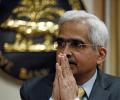
The RBI's rate-setting panel MPC on Monday began its three-day deliberation amid expectations of another round of hike in benchmark interest rates to contain inflation that continues to remain above the central bank's upper tolerance level. RBI Governor Shaktikanta Das will announce the decision of the Monetary Policy Committee after deliberations on Wednesday. Das has already indicated that there may another hike in the repo rate, though he refrained from quantifying it.

'I'm pitching India for the strengths we offer, including the English language, engineers, doctors, nurses, professionals, innovative talent of startups.'

Every 10 per cent rise in crude oil price will shave off around 0.2 percentage point (pp) from India's GDP growth and widen the current account by 0.3 per cent, says Nomura.

Manchester City swept aside second-tier Cardiff City 2-0 with first-half goals from Kevin De Bruyne and Raheem Sterling on Sunday to reach the FA Cup fifth round in their quest to win an unprecedented four trophies this season.

India, he said, has already taken a host of reforms in banking and other sectors and is now focussing on stepping up public investment. "Compared to other nations, even among advanced countries, I think India is relatively better placed for the simple reason that India paid a certain price last decade... we had a banking system stress which was then compounded by stress in the non-banking financial sector towards 2018," he said at Amazon Smbhav Summit.

High inflation print is the price that the Reserve Bank of India (RBI) will have to pay to nurse a fragile growth back, say economists. Wholesale Price Index-based inflation rose to a record high of 12.94 per cent in May, aided by low base effect, but also because of higher fuel and commodity prices. Retail inflation, too, surprised by rising to 6.30 per cent, while the core inflation, which is the non-food and non-fuel component, rose to an 83-month high of 6.55 per cent. These numbers are much above RBI's upper limit of 6 per cent inflation target, but there is very little that the RBI can do at this moment.

FM indicates adherence to fiscal road map, benign tax rates, correction in inverted duty structure

The primary and immediate impact of a depreciating rupee is on the importers who will have to shell out more for the same quantity and price. However, it is a boon for the exporters as they receive more rupees in exchange for dollars. The rupee depreciation has wiped away some of the gains that would have accrued to India from international oil and fuel prices dropping to pre-Ukraine war levels.

The official premise that Maoism is India's 'greatest internal security threat' is profoundly mistaken. The Maoists aren't about to capture power, destroy India's unity, or undermine her security. They pose a civil law-and-order problem, which should be tackled by normal police methods, says Praful Bidwai.

Petrol and diesel price hikes are likely to resume after state elections get over next week to bridge the Rs 9 a litre gap created by international oil prices soaring past $100 a barrel. International crude oil prices shot above $110 a barrel for the first time since mid-2014 on fears that oil and gas supplies from energy giant Russia could be disrupted, either by the conflict in Ukraine or retaliatory western sanctions. The basket of crude oil India buys rose above $102 per barrel on March 1, the highest since August 2014, according to information from the Petroleum Planning and Analysis Cell (PPAC) of the oil ministry.

In the Upper House of Parliament, Chairman M Venkaiah Naidu did not allow adjournment notices moved by opposition members on the issue of price rise, prompting members of the Congress, the Trinamool Congress, the Left parties, the Dravida Munnetra Kazhagam, the Aam Aadmi Party, the Nationalist Congress Party, the Rashtriya Janata Dal and the Shiv Sena to create an uproar.

The development came as the local fishermen in the North have been protesting for over a week to stop the Indians from entering the Sri Lankan waters for fishing.
